Terry
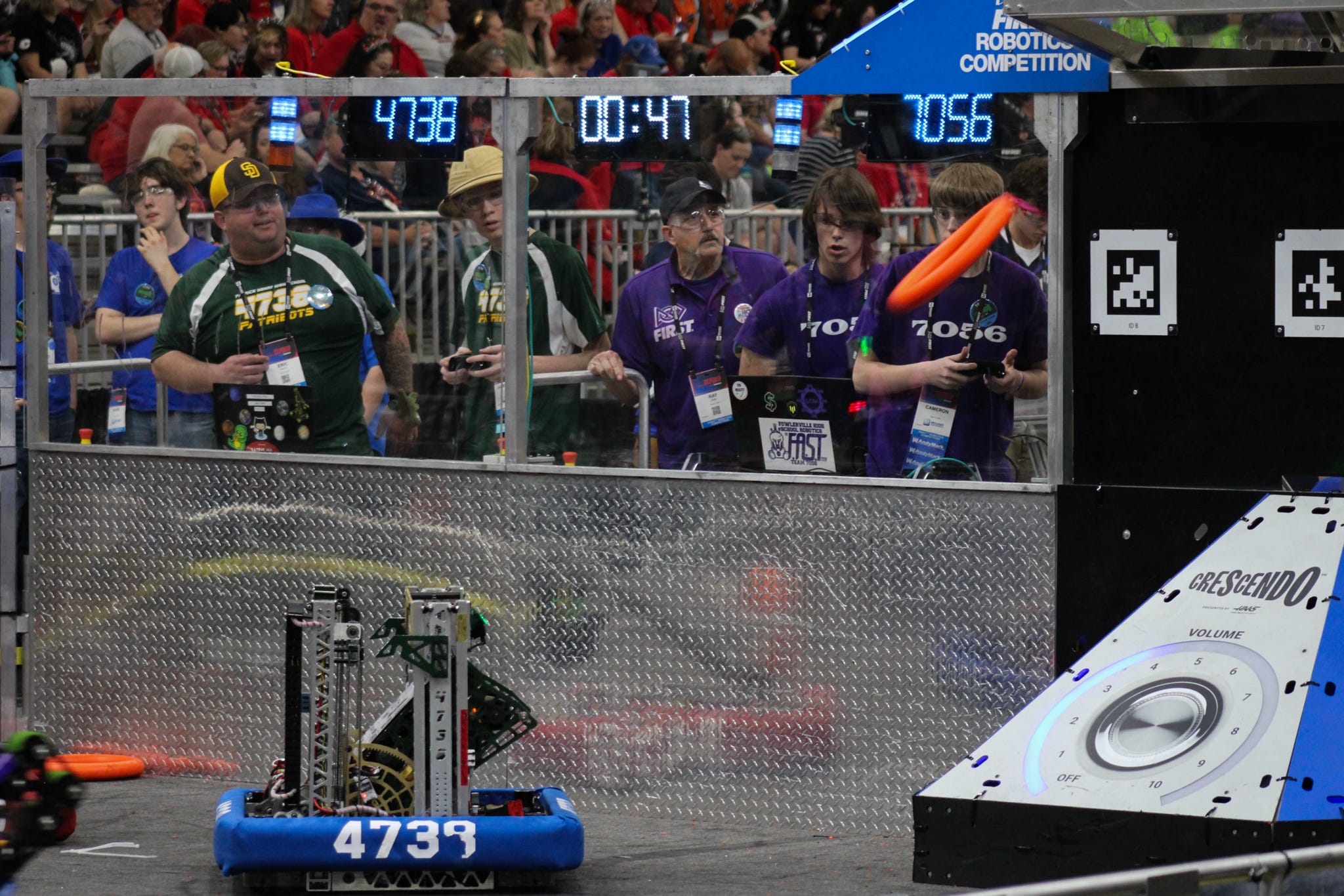
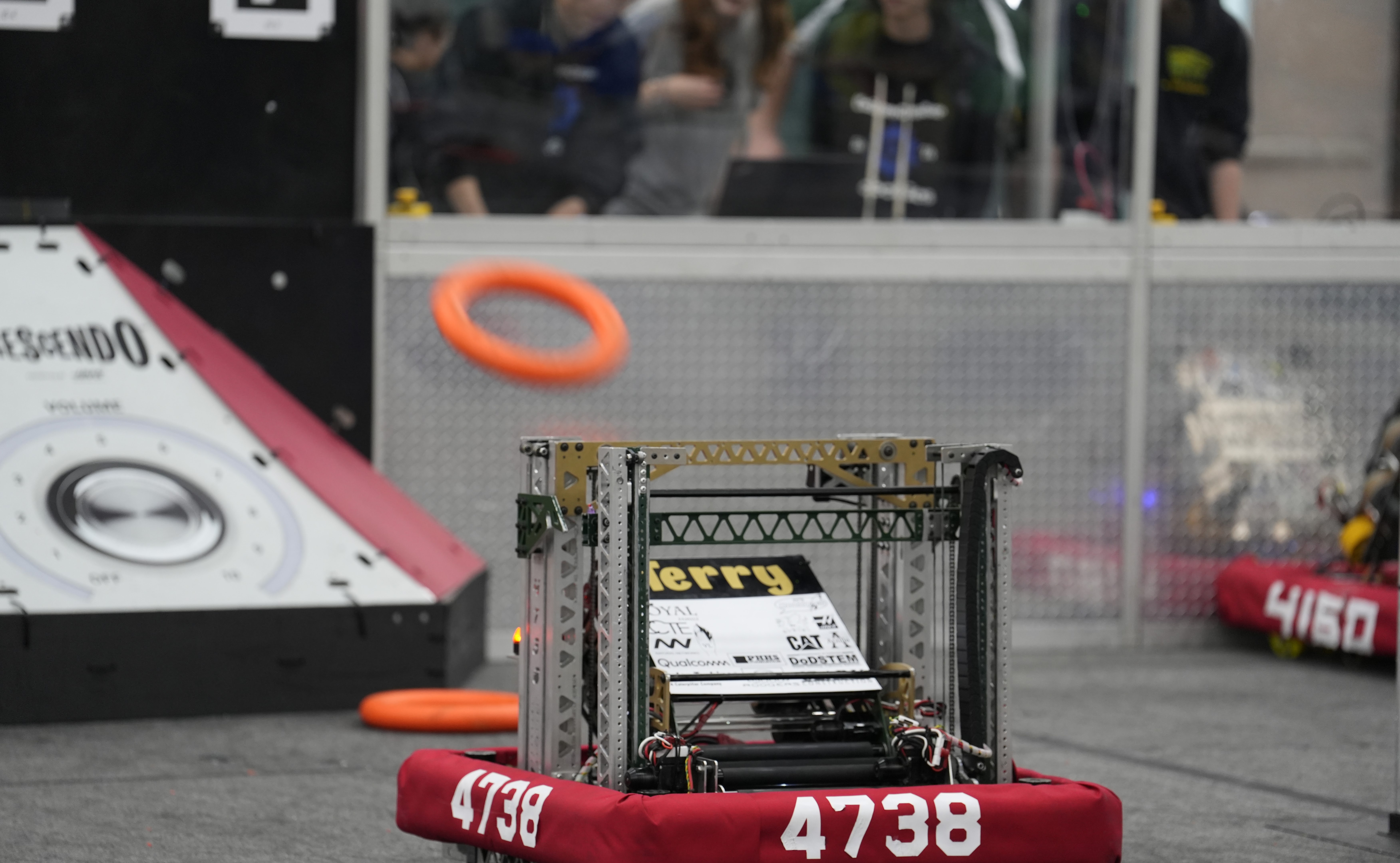
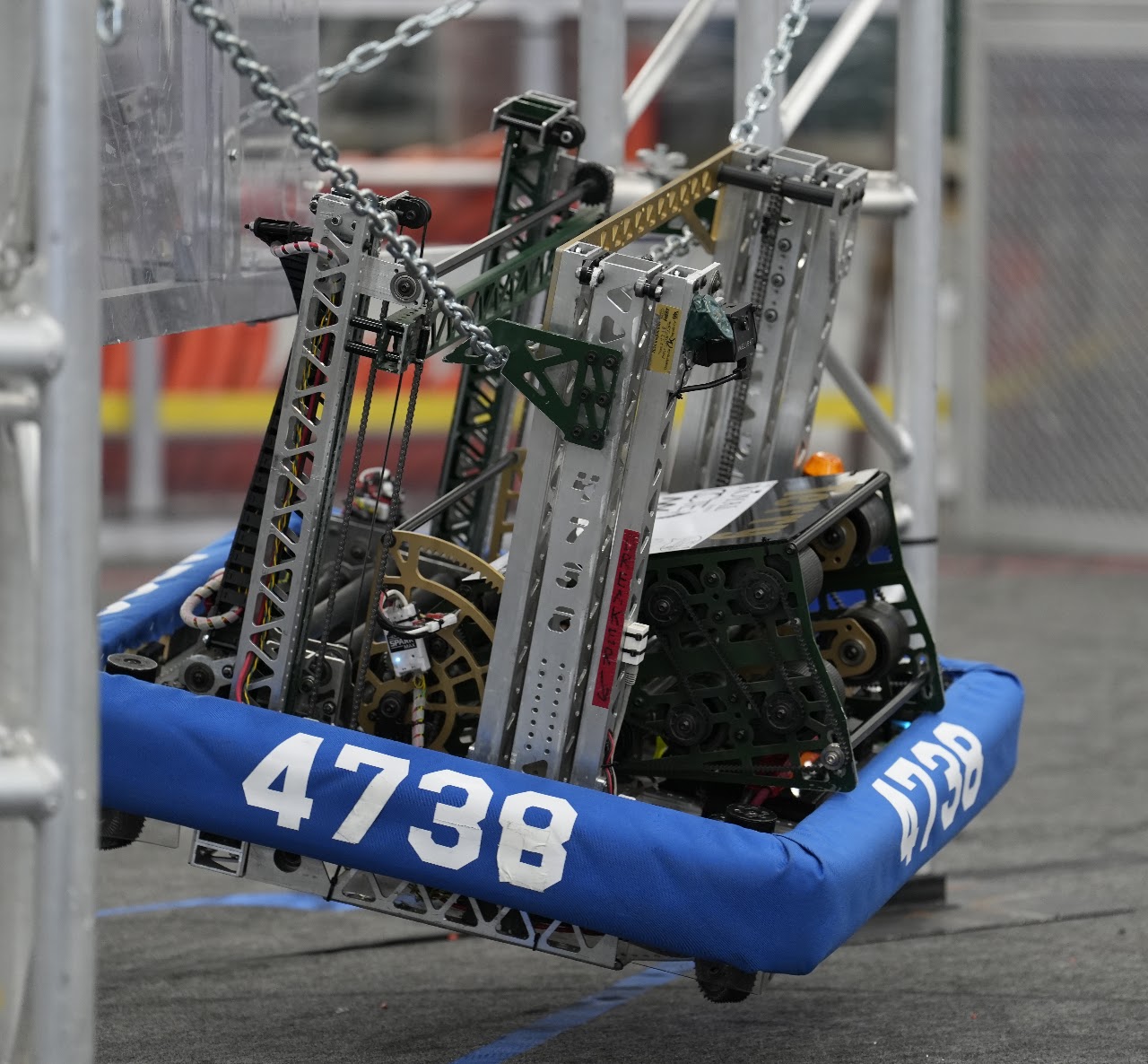
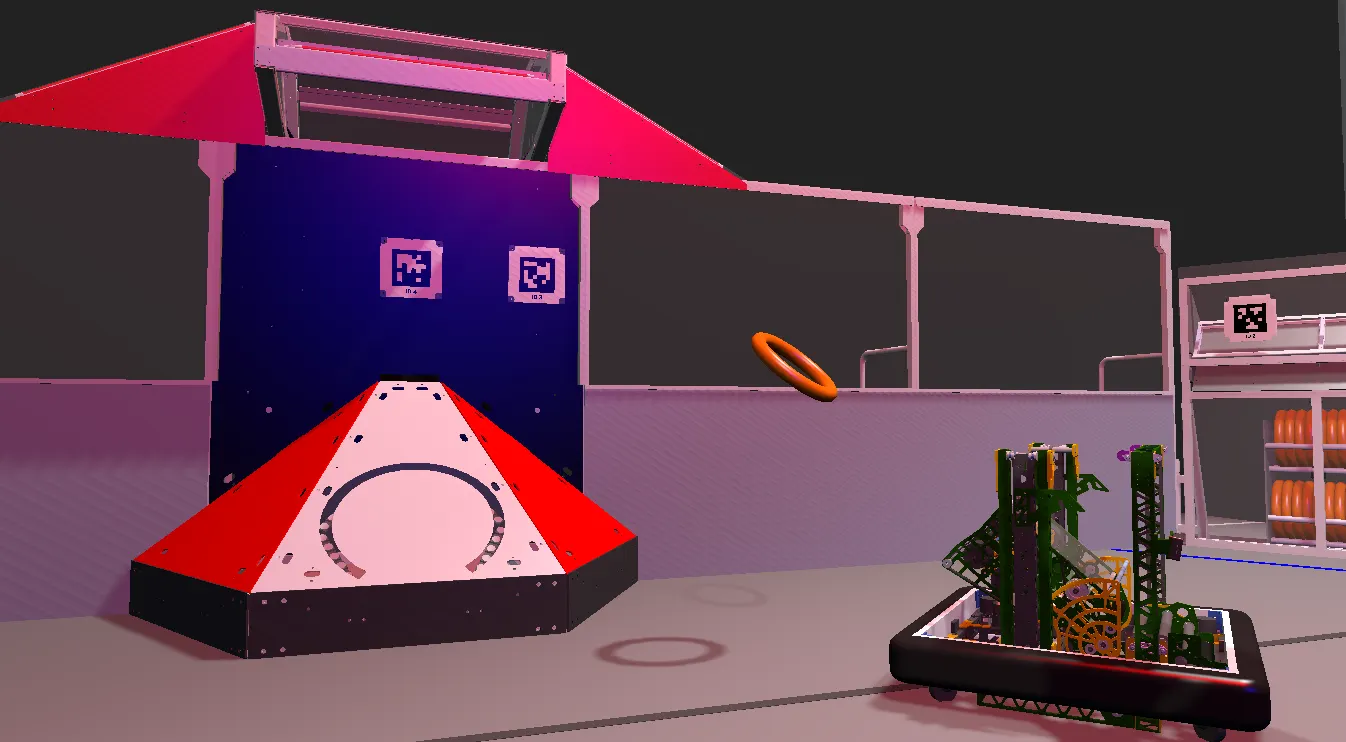
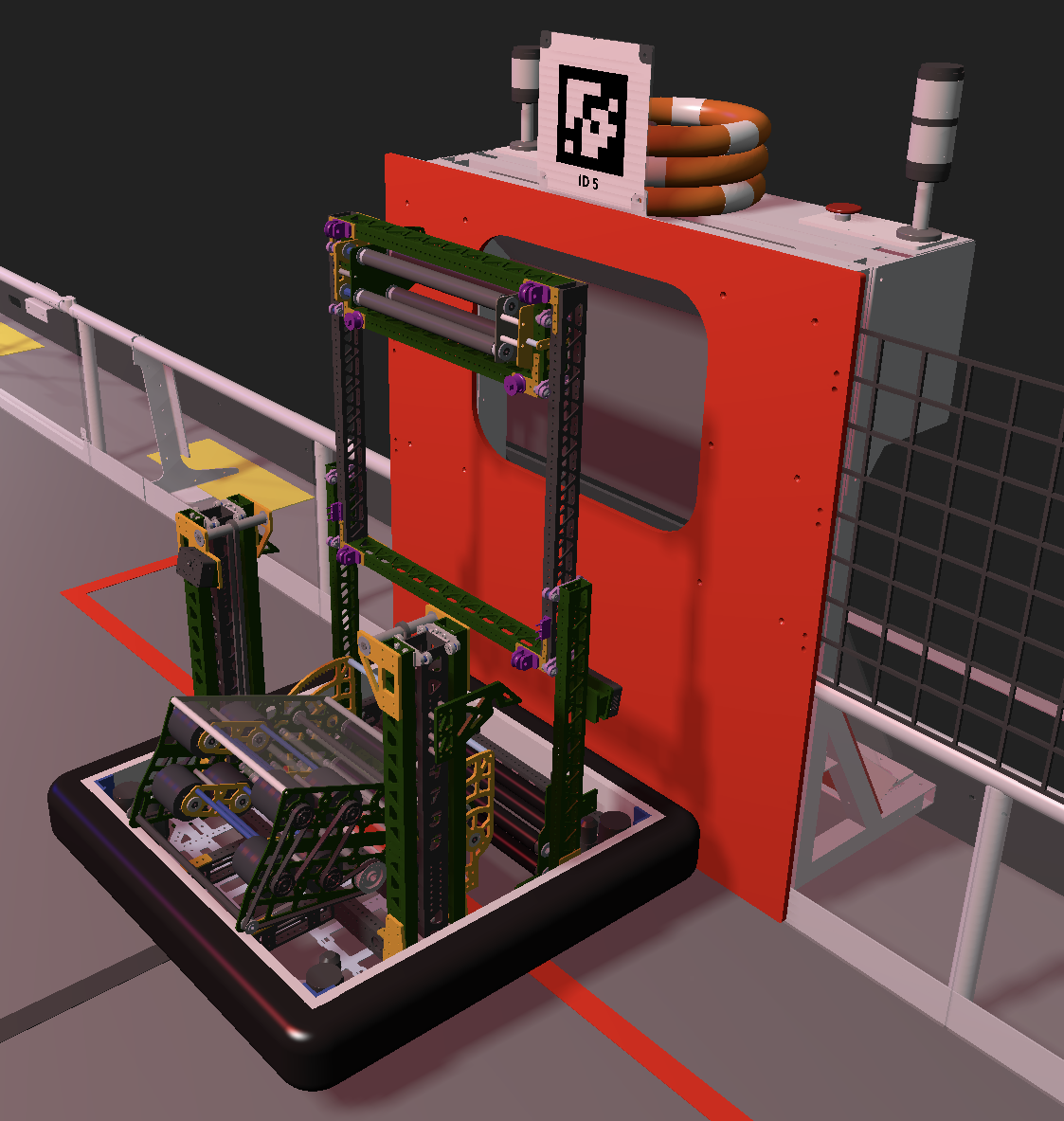
A 2024 FRC robot with swerve drive, a pivoting shooter, vision-assisted aiming, reusable autonomous routines, and a simulator used during development. Terry was built to pick up and shoot orange donuts called notes in the 2024 FRC game, Crescendo.
Measured highlights
- Fully synchronized digital twin
- dual-purpose runtime for simulation or real deployment
- ±3 cm precision
- required for precise autonomous navigation
- 92% shot accuracy
- effective range: 4-20ft
Context
The 2024 game rewarded fast collection and shooting, so the robot needed to move accurately and spend as little time as possible lining up each shot.
Terry is a swerve-drive competition robot that picks up game pieces, aims, shoots, and runs autonomous routines using the same core logic in simulation and on the physical robot.
The software work
- Simulation
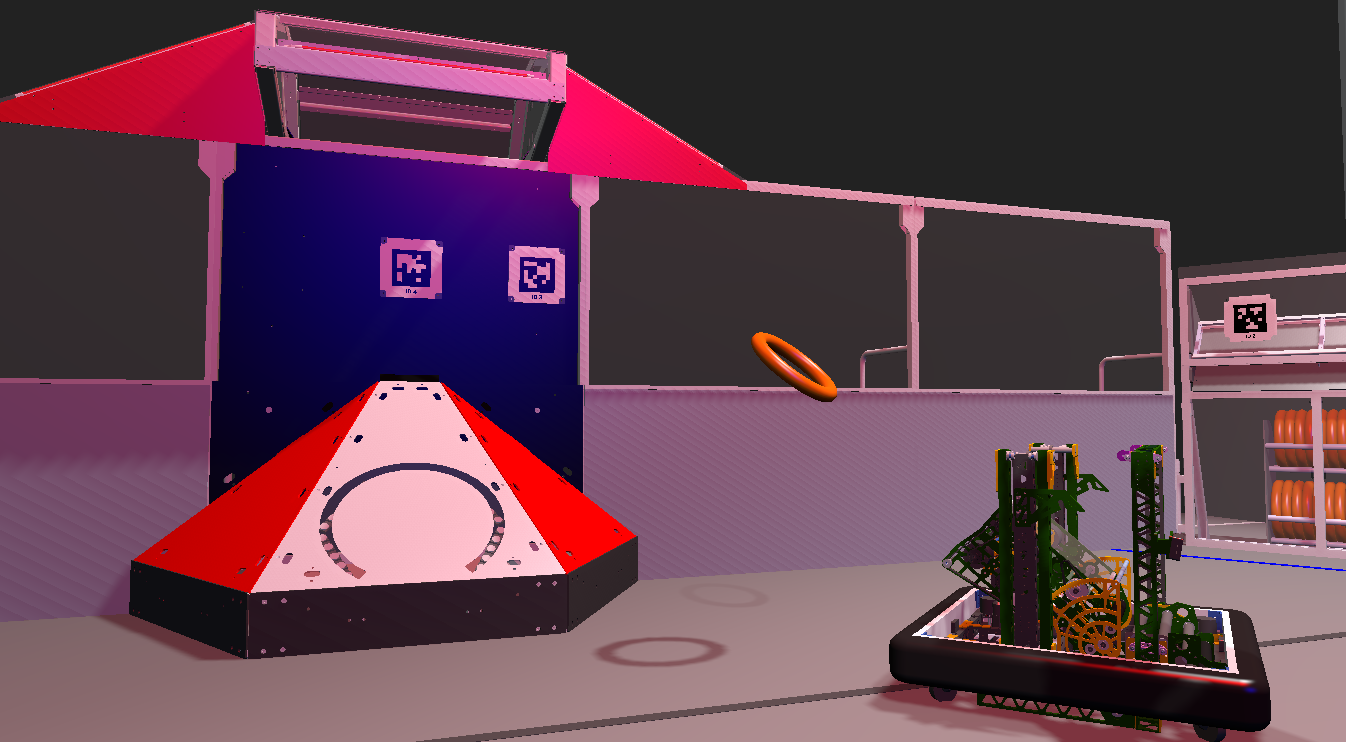
The Java simulator supported autonomous and teleoperated operation while sharing core logic with the physical robot.
- Motion
Swerve-drive kinematics, odometry work, and tuned acceleration curves supported autonomous positioning.
- Scoring
Reusable path segments and shooting calculations let autonomous routines combine movement and game-piece handling.
My role
- Responsibility
- Software Lead
- Team
- Software team of about 10
- Tools
- Java · WPILib · Swerve · Autonomy · CAD
I led a software team of about ten and wrote substantial parts of the Java robot code. I built the simulator, developed the shooting-while-driving math, tuned motor acceleration, worked on odometry, and built reusable autonomous path segments. I also wrote base-case unit tests and improved motor configuration reliability.
Paths and simulation
1 / 3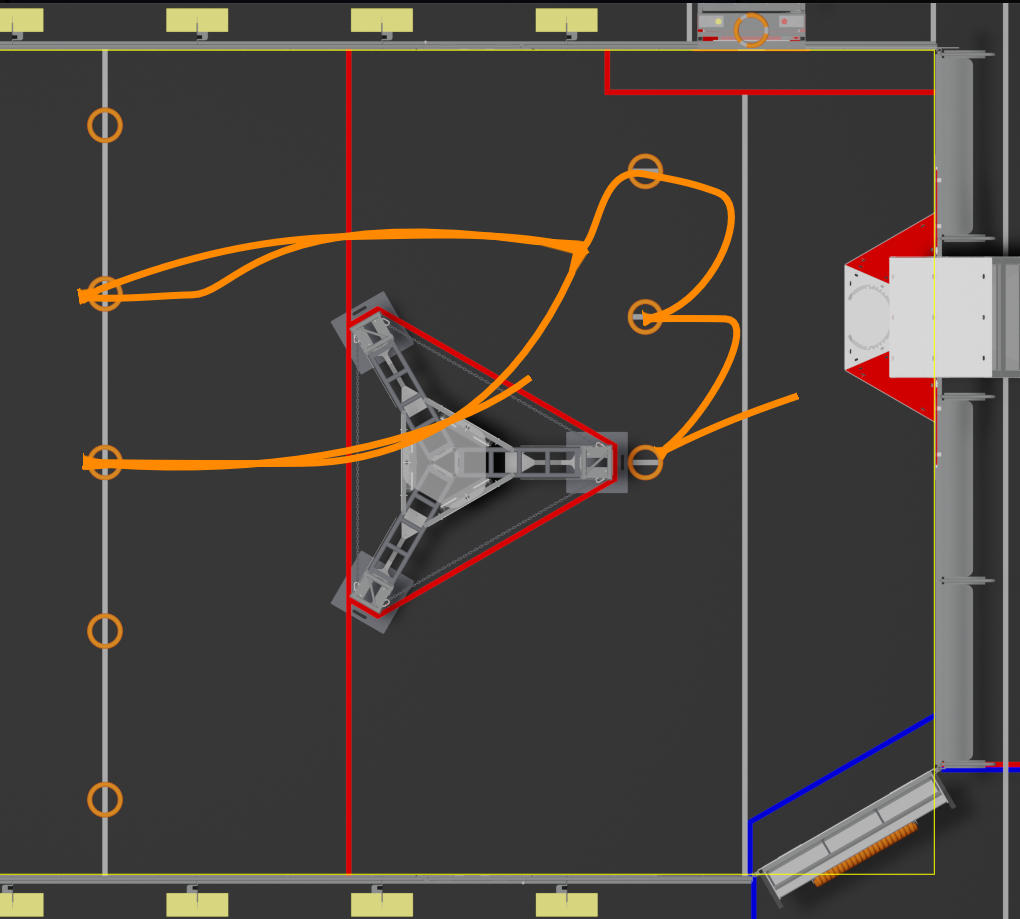
Process & decisions
Simulation was waiting on fake hardware.
Fake motors and other simulated devices still passed through configuration written for physical hardware. Some vendor configuration calls added waits even though there was nothing to configure.
- Separate hardware setup from robot behavior
- I identified which configuration work only mattered on the physical robot and kept it out of the simulated startup path.
- Keep the shared logic intact
- The simulator still ran the same autonomous and teleoperated code instead of becoming a separate simplified implementation.
- Check the base cases
- I added unit tests for basic behavior so the faster startup path did not quietly change how the robot code worked.
Shooting while moving
1 / 2Outcome
First simulation startup became about 13 seconds faster, an improvement of roughly 80%. That made the simulator easier to use while the physical robot was being built or repaired.
- Before
- Hardware-only waits in simulation
- After
- About 13 seconds removed
On the field
1 / 4